














Rwanda Court Orders DNA Test in Vestine Ishimwe’s child Paternity Dispute
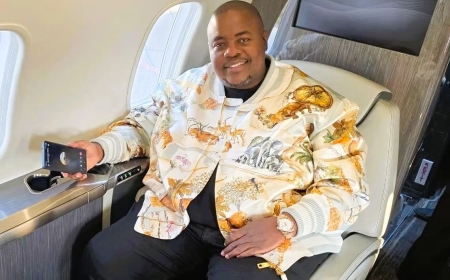
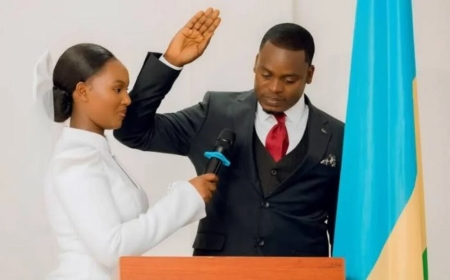
Kicukiro Primary Court has ruled in favour of Burkinabe businessman Idrissa Ouedraogo in a paternity dispute involving his wife, gospel singer Vestine Ishimwe, ordering a DNA test to establish the biological parentage of their child and directing Ishimwe to facilitate his access to the child.

In its ruling delivered on Wednesday, October 28, the court ordered that DNA samples be collected at Ishimwe’s current residence in Canada and sent to the Rwanda Forensic Institute (RFI) for analysis and verification. It also directed the singer to provide Ouedraogo with multiple photographs of the child.
Ouedraogo had petitioned the court seeking a DNA test and an order requiring Ishimwe to present the child to him.
The court said its decision was based on Article 48 of the family law and followed an agreement between the parties.
The ruling follows a hearing held in camera on October 21, during which the court examined the child’s birth certificate. The document identifies Ishimwe as the mother but does not name Ouedraogo as the father.
The paternity dispute is separate from the divorce proceedings initiated by Ishimwe, which are scheduled for hearing on December 3, 2026.

Ouedraogo seeks DNA
Ouedraogo said that he sought the court’s intervention after attempts to resolve the matter amicably failed.
“The situation arose after Vestine Ishimwe initiated divorce proceedings and I was denied access to the child from birth. As a result, I have been unable to establish a relationship with the child or obtain the clarity I need regarding my parental position,” he said.
He said the DNA test would establish the child’s biological parentage and help clarify his parental rights and responsibilities.
“My intention is not to punish Vestine, damage her reputation, or turn a private family matter into a public confrontation. I am seeking clarity through the law because I believe that questions as fundamental as parentage should be resolved through evidence, due process, and fairness, not speculation or public opinion,” he said.
Ouedraogo added that the child’s best interests should remain central to the proceedings.
The case was adjourned twice before the court delivered its ruling.
On October 7, proceedings were postponed after Ishimwe’s lawyer submitted a letter to the presiding judge through the Electronic Integrated Case Management System (EICMS), indicating that he and his client had agreed to a DNA test. This marked a shift from their earlier position opposing the test.
The hearing was rescheduled for October 14 but was adjourned again after the court found that the child’s birth certificate had not been uploaded to EICMS. The court fined Ishimwe’s side Rwf200,000 over the delay.
The birth certificate was subsequently presented at the October 21 hearing, which lasted about an hour.

Vestine wants divorce
The paternity dispute comes amid a breakdown in the couple’s relationship, which became a subject of public discussion following a series of social media posts by Ishimwe.
On November 18, 2025, a few months after their wedding, the singer published a lengthy message expressing dissatisfaction with her circumstances and regret over some of her life decisions.
“The life I am living today is not the one I chose. I am going through difficult times, and this is not what I deserve. I know I made bad choices in my life, but there is nothing I can do about it,” she wrote.
She added that she would be more cautious when choosing a future partner, saying she would first make sure she knew him and his family well.
“Next time I choose a man to live with, he will be someone I know well. I will know his family and everything about him. No one will ever use me again,” she said.
The post prompted questions from some of her followers about her personal life. She later deleted it, and many photographs of her and Ouedraogo disappeared from her Instagram account.
In September 2026, Ishimwe shared another lengthy account on social media describing what she portrayed as a difficult experience in the relationship.
She alleged that her partner had another family and had attempted to interfere with her music career and damage her reputation. She also said she left while pregnant and gave birth away from him, adding that she had waited for tensions to ease before allowing the child’s father to see the child.
Ishimwe subsequently petitioned Kicukiro Primary Court to dissolve their marriage.
Following a pre-trial conference on September 14, the court scheduled the divorce case for hearing on December 3, 2026.
In her petition, Ishimwe said she was not seeking a division of property or other assets if the court granted the divorce. She also indicated that she intended to continue raising the child, who is still young and lives with her.
While the paternity case concerns Ouedraogo’s request for a DNA test and access to the child, the divorce proceedings will determine whether the marriage should legally end.
Vestine's manager denies arranging the relationship
Irene Murindahabi, who managed Ishimwe and fellow gospel singer Dorcas Kamikazi, has also addressed allegations circulating on social media about the couple’s relationship.
Speaking on his MIE YouTube channel, Murindahabi denied claims that he had introduced Ishimwe to Ouedraogo or arranged their relationship.
“The day she came to my office and told me that she had someone she was dating and that they were planning to live together, I was shocked,” he said.
Murindahabi explained that he had known the singers since they were 16 and had hoped to develop their music careers into an international gospel ministry. He said he eventually accepted Ishimwe’s decision and continued to support her.
“I was like a parent to them because we met when they were 16. After teaching them music, I also had to talk to them and advise them about other things. You cannot fight love, so I chose to support her,” he said.
Murindahabi also said he had been summoned by the Rwanda Investigation Bureau over allegations related to human trafficking. He denied wrongdoing and said he had provided a statement to investigators.
The October 28 ruling marks a significant development in the paternity dispute, with the DNA test expected to help establish the child’s biological parentage. The separate divorce case is scheduled for hearing on December 3, 2026.