


















Rwanda, Oman explore fuel storage facilities to safeguard imports
Rwanda and Oman are exploring plans to strengthen fuel storage infrastructure as part of efforts to safeguard petroleum imports and ensure a more reliable supply amid growing uncertainty in global energy markets

The discussions follow recent agreements aimed at securing long-term fuel supplies for Rwanda, as the country seeks to diversify its import sources and reduce its vulnerability to international supply disruptions.
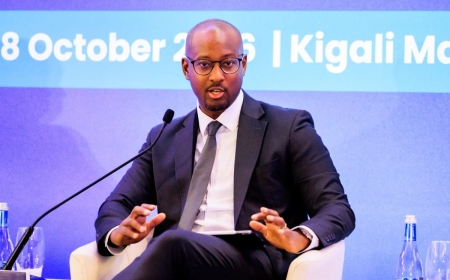
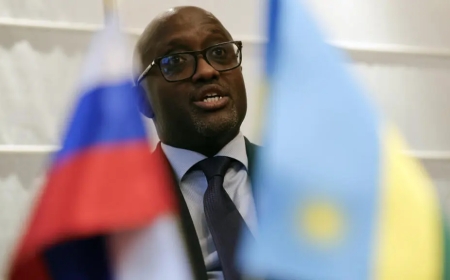
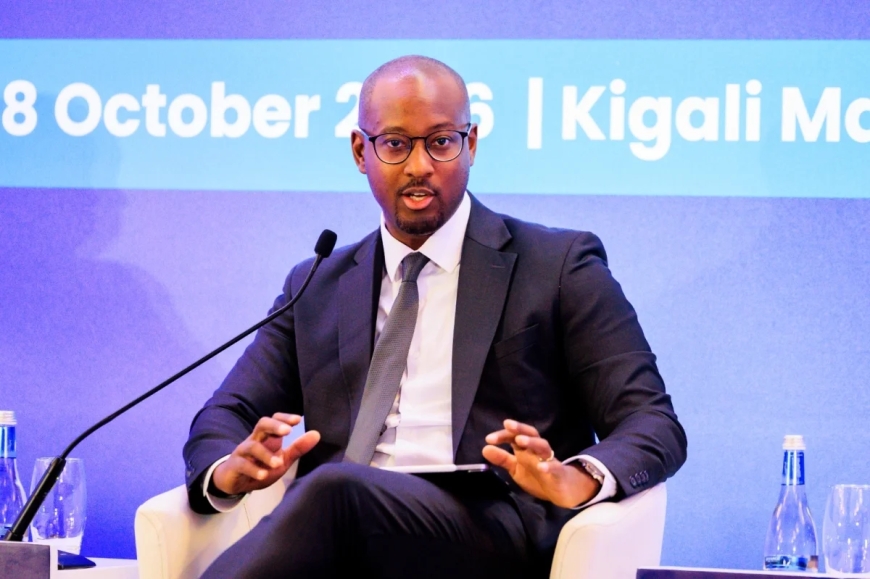
Oman's Minister of Transport, Communications and Information Technology, Said bin Hamoud Al Maawali, confirmed the discussions in an interview on the sidelines of a forum organised by the International Security Conference on Africa (ISCA) in Kigali on Wednesday, October 28.

He said the two countries were considering fuel storage arrangements at both ends of the supply chain, particularly at ports in Oman and East Africa, to ensure greater security and continuity of petroleum imports.
“By both ends, I mean the ports in Oman, but also the ports on the side of East Africa,” Al Maawali said.
The discussions come after Rwanda began importing petroleum products directly from Oman under arrangements intended to strengthen the country's long-term fuel supply security.
Rwanda has received three bulk petroleum shipments totalling approximately 120,000 tonnes. The first two consignments, each weighing about 40,000 tonnes, arrived through Tanzania's Port of Tanga in July and August, while the third shipment entered through Kenya's Port of Mombasa in September.
Al Maawali said Rwanda had entered into an agreement with an Omani state-owned trading company to secure fuel supplies through long-term contracts.
“There was an agreement between the government of Rwanda and one of the trading companies owned by the government in Oman to achieve long-term contracts, and they've signed this. I think the first shipment came recently,” he said.
He explained that securing long-term contracts was only one part of ensuring reliable petroleum supplies, with adequate storage and transport infrastructure equally important.
“We spoke about the necessity of working on both the infrastructure side, basically investment in infrastructure, both at the source side, but also at the receiving end,” he said.
According to Al Maawali, recent global developments and threats to energy supply chains have highlighted the need for countries to invest in infrastructure that can cushion them against disruptions.
He said long-term supply agreements, supported by adequate storage facilities, would help strengthen energy security and improve the resilience of supply chains.
The minister added that cooperation could extend beyond petroleum products to other energy sources, including renewables, as well as petroleum-derived products needed for economic development.
These include fertilisers and sulphur used in mining and other industrial activities.
“There are a lot of aspects in terms of collaboration between the Middle East, Oman in particular, and Africa when it comes to what we can learn from each other and what we can collaborate on to ensure that there is a secure future when it comes to energy,” he said.
Govt prioritises fuel storage and transport infrastructure
Minister of Trade and Industry Antoine-Marie Kajangwe said Rwanda was strengthening partnerships with countries in the Middle East and East Africa to secure petroleum imports while investing in infrastructure to support reliable energy supplies.
He identified Oman among the strategic partners Rwanda has engaged in recent months to diversify fuel sourcing and strengthen the country's energy security.
“Specifically, over the last few months, there has been a lot of engagement with countries in the Middle East, such as Oman, to secure fuel imports. There have also been partnerships with countries such as Kenya and Tanzania to ensure corridors for importing these critical commodities,” Kajangwe said.
He outlined several strategic measures Rwanda is pursuing to safeguard energy supplies, including consolidating domestic demand to secure more affordable imports and strengthening storage and transport infrastructure.
“One is what we have discussed about how to optimise and efficiently source and consolidate domestic needs so that we can source supplies more cheaply and ensure the security of supply for the country. That has been a critical priority,” he said.
“Secondly, it is about investing in infrastructure for storage and transport, whether through pipelines, roads or railways.”

Kajangwe said securing reliable import corridors and expanding infrastructure would help Rwanda build resilience against external shocks that could affect petroleum availability and prices.
He added that continued collaboration with regional partners would enable Rwanda to benefit from initiatives under the East African Community (EAC), the African Continental Free Trade Area (AfCFTA) and other continental programmes.
“These are the strategic options we are pursuing. Ultimately, it is about building resilience against vulnerabilities,” he said.
Beyond petroleum imports, Kajangwe said Rwanda was also collaborating with investors across the continent to develop critical energy sectors, including refineries and electricity generation from solar, hydropower and other renewable sources.
Oman eyes stronger trade ties with East Africa
Al Maawali said Oman regarded East Africa as a longstanding trading partner and was seeking to deepen cooperation with the region, particularly in energy and related industries.
He noted that the historical relationship between Oman and East Africa provided a foundation for expanding partnerships to address emerging economic and energy security challenges.
“Oman views the whole of East Africa as a traditional trade partner. It has been for a millennia and it will remain for another millennia,” he said.
Given Oman's size, he said, the country could initially focus on East Africa as a model for broader cooperation between African countries and the Middle East.
“The future growth in the world is going to happen in Africa, and we need to work together to ensure that there is security both ways when it comes to energy,” he said.
He added that stronger partnerships could support reliable energy supplies, industrial development and economic growth in both regions.

Global tensions put energy security in focus
The discussions took place during an ISCA forum held under the theme “Contemporary Energy Dynamics and Strategic Options for Africa”.
The forum brought together policymakers, practitioners and experts from Africa and beyond to examine how changing global energy dynamics are affecting the continent and what countries can do to strengthen their energy security.
ISCA Executive Director Lt Gen (Rtd) Frank Mushyo Kamanzi said geopolitical tensions, armed conflicts, sanctions, market volatility and supply chain disruptions were increasingly exposing countries to energy insecurity.
He cited the war in Ukraine, sanctions imposed on Russia and instability in the Middle East as examples of developments that have disrupted global energy markets and threatened critical supply routes.
“The ongoing war in Ukraine, together with the sanctions imposed on Russia, has demonstrated how geopolitical confrontation can disrupt energy markets and international trade,” he said.
“Similarly, conflict and instability in the Middle East, particularly tensions affecting the Persian Gulf and the Strait of Hormuz, have highlighted the vulnerability of global energy supplies and strategically important maritime routes.”
For African countries, Kamanzi said, such disruptions had direct consequences for fuel prices, transport costs, food security, industrial production and broader economic stability.
“Indeed, they remind us that energy is not simply an economic commodity. It is a fundamental dimension of national security, economic resilience and strategic autonomy,” he said.
Despite the continent's substantial reserves of oil, natural gas and critical minerals, as well as its significant renewable energy potential, he noted that many African countries continued to struggle with inadequate infrastructure, limited financing, unreliable supplies and high energy costs.
Kamanzi urged African countries to diversify their energy sources, invest in resilient infrastructure and strengthen regional cooperation to reduce dependence on vulnerable international supply chains.
“Energy policies must respond to Africa's development realities, ensuring that households, businesses and industries have access to dependable and affordable energy,” he said.
“Africa's energy transition must balance environmental sustainability with the urgent requirements of industrialisation, employment creation and growing energy demand.”
He also called for greater investment in local processing, value addition, technological development and industrial capabilities to ensure the continent benefits more from its energy resources.
“Greater cooperation among African countries and mutually beneficial international partnerships will be essential to enhancing energy security and reducing strategic dependence,” he said.