
















Musanze fire destroys major market as traders question GOICO’s safety measures
A massive fire gutted Musanze’s GOICO Market in Rwanda, destroying businesses and raising concerns over fire safety as traders face heavy losses.

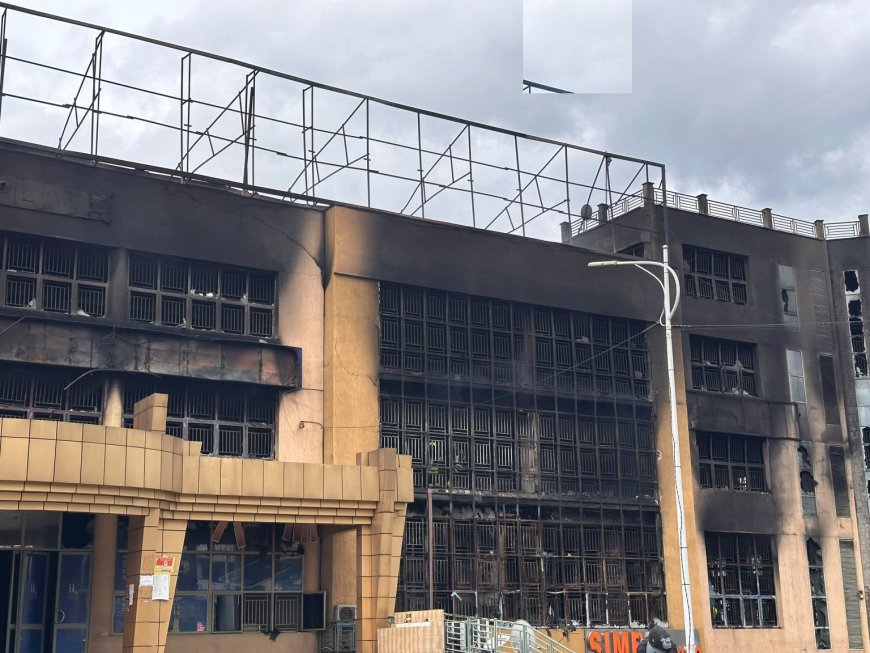
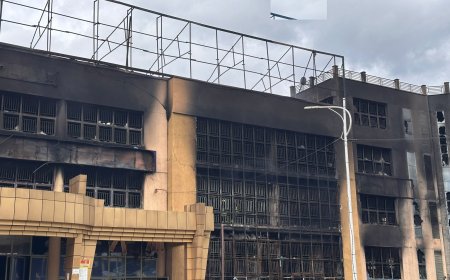
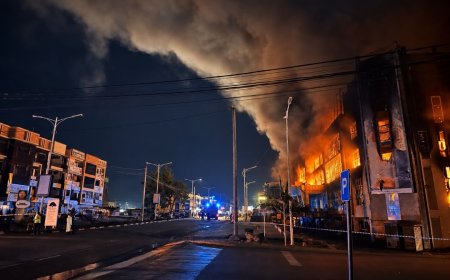
A massive fire gutted the five-storey Gorilla Investment Company (GOICO) building, which houses Musanze’s main market, banks and major retail businesses, after breaking out at around 3:30 p.m. on Saturday, October 10, 2026.
The fire spread across several floors of the commercial complex, destroying merchandise and business premises and leaving thousands of traders facing potentially devastating financial losses. Firefighting operations continued into Sunday morning, October 11, as emergency responders worked to extinguish the remaining flames and prevent the fire from spreading to neighbouring buildings.
The building, which began operating in 2017, reportedly accommodated more than 2,000 traders and attracted over 15,000 visitors daily, making it one of the major commercial centres in Musanze District, Northern Province.
The exact financial cost of the destruction, the number of casualties, if any, and the official cause of the fire had not been established in the information available at the time of publication.
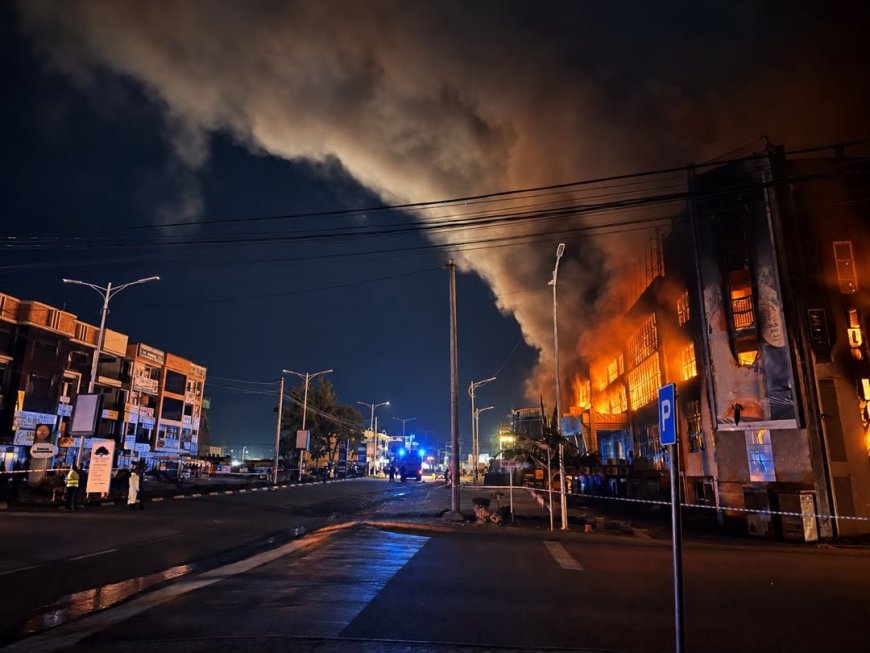
Fire reportedly started during welding work
Witnesses said the fire appeared to have started on the fifth floor, where welding activities were reportedly taking place. The flames initially appeared manageable but quickly intensified, spreading to other sections of the building.
As the fire descended through the floors, it reached shops selling clothing, plastic products, electronics and other merchandise. Motorcycles and other goods stored on the lower floors were also reportedly caught in the blaze.
A trader identified as Nshimiye said the situation deteriorated rapidly as the fire spread from the upper floors towards the lower sections of the market.
“By this morning, the police were still fighting the fire, although there appeared to be little left to save,” he said on Sunday, describing the extent of the destruction.
Nshimiye alleged that the fire spread from the fifth floor through the building’s lift area before reaching the first floor, where it consumed more merchandise and other property.
He also questioned whether the emergency response had been sufficient to contain the fire while it was still concentrated on the upper floor.
Another witness, Angélique, said police arrived at the scene and restricted access to the building as the fire intensified. She said a fire engine was also deployed but argued that the available equipment appeared inadequate to reach and extinguish the flames on the upper floors.
The reported involvement of welding work has not been officially confirmed as the cause of the fire. An investigation would be needed to establish what triggered the blaze and how it spread so extensively.
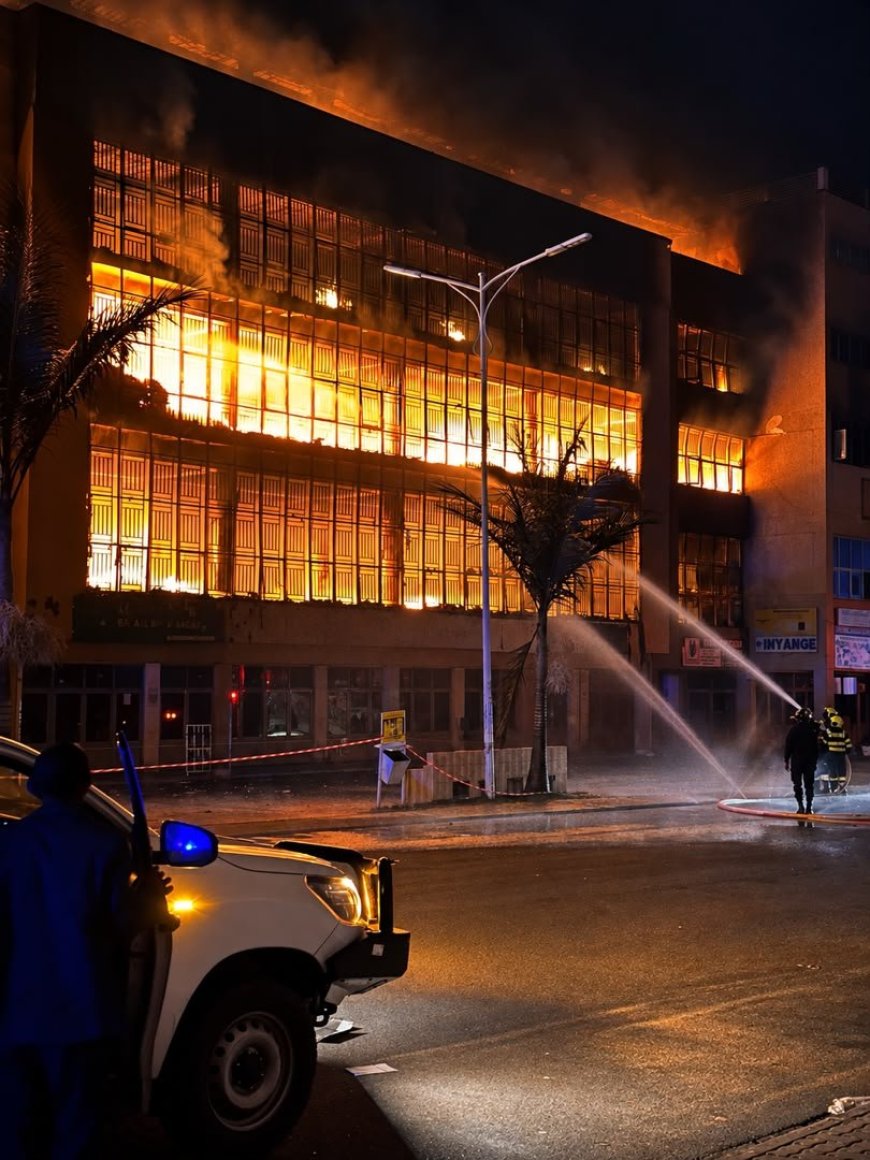
Questions raised over fire safety equipment
The destruction has prompted questions from traders about the building’s fire prevention systems, emergency preparedness and the adequacy of the response.
Some traders alleged that the building’s fire hydrant system, which supplies water through firefighting outlets, was not functioning properly when the fire broke out.
According to the witnesses, attempts to use firefighting hoses while the flames were still concentrated on the fifth floor were unsuccessful because water was reportedly unavailable.
If confirmed, the allegation could raise serious questions about the maintenance and operation of fire safety equipment in a building accommodating thousands of traders and large numbers of daily visitors.
Traders also argued that the available firefighting equipment struggled to tackle a fire that had reached the upper floors. Some suggested that additional specialised equipment capable of reaching greater heights might have helped contain the blaze before it spread further.
However, it remains unclear what equipment was available at the scene at each stage of the emergency, when additional resources arrived and whether any technical failures contributed to the scale of the destruction.
The allegations concerning the fire hydrant system and the adequacy of the emergency response had not been independently verified by the time of publication.
Beyond the fire suppression system, traders raised concerns about overcrowding and the arrangement of commercial activities inside the building.
They alleged that the number of businesses operating in the complex had increased substantially, leaving limited space in some areas. They also pointed to the use of parking areas for additional construction, which they claimed may have restricted access for emergency vehicles.
According to the witnesses, adequate access routes could have allowed firefighters to approach the building more easily and tackle the flames before they spread to the lower floors.
The traders also claimed that concerns about overcrowding had previously been brought to the attention of GOICO management.
These allegations have yet to be independently verified. An assessment of the building’s design, occupancy levels, emergency access routes and compliance with fire safety requirements would be needed to determine whether any shortcomings contributed to the disaster.
Some affected traders have called for GOICO Managing Director Jean Claude Uragiwenimana to explain the circumstances surrounding the fire and address concerns about the management of the commercial complex.
They alleged that traders, including some involved in market leadership, had previously raised concerns about overcrowding and the potential difficulties of responding to an emergency in the building.
Traders fear debt after losing their businesses
For many traders, the fire has destroyed more than merchandise and shop premises. It has also threatened the livelihoods they relied on to support their families and repay business loans.
Some affected business owners said they had borrowed money from banks to finance their businesses and purchase stock. With their goods reportedly destroyed, they now face uncertainty over how they will continue making loan repayments without their usual sources of income.
Traders appealed to the government to consider measures to help affected businesses recover and resume operations.
Police, military and other responders work through the night
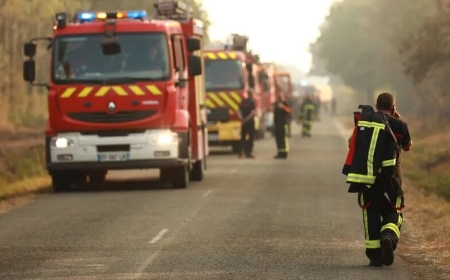
The fire prompted an extensive emergency response involving the Rwanda National Police, military personnel and other responders.
Teams worked through the night from Saturday into Sunday in an effort to extinguish the flames and prevent the fire from spreading to nearby buildings.
By Sunday morning, the fire appeared to have weakened, according to witnesses, but flames were still visible in parts of the damaged complex. Responders continued working to bring the situation under control.
The operation also involved restricting access to the building to prevent members of the public from entering the dangerous structure in search of goods that might have survived the fire.
The severity of the damage presented additional challenges for traders hoping to recover merchandise. Witnesses said much of the stock and other property inside the building had been reduced to ashes.
Musanze mayor urges residents to stay away
Musanze District Mayor Nsengimana Claudien visited the scene on Sunday morning alongside security officials and addressed residents affected by the disaster.
He urged the public to remain calm and avoid entering the damaged building while firefighting operations continued.
The mayor acknowledged the distress caused by the destruction and reminded residents that protecting human life remained the immediate priority, even as businesses counted their losses.
His message came as traders and other residents gathered around the scene to assess the damage and seek information about their property.
The immediate focus remained on extinguishing the remaining flames, securing the area and preventing further danger to people and nearby buildings.
The GOICO building began operating in 2017 after an investment project involving Gorilla Investment Company, a business formed by 89 private investors from Musanze District.
The project reportedly cost Rwf7.5 billion, with a substantial portion of the investment financed through bank loans.
The five-storey complex housed a broad range of commercial activities, including small retail shops, wholesale businesses, clothing outlets, electronics dealers, plastic-product sellers, financial institutions and major retail stores.
With more than 2,000 traders reportedly operating in the building and over 15,000 people visiting daily, the market served as an important centre for trade in Musanze and surrounding areas.
Its destruction is therefore expected to have consequences extending beyond individual shop owners, potentially affecting employees, suppliers, customers, transport operators and other businesses that depended on the market’s commercial activity.
The reported investment figure also highlights the scale of the physical assets involved, although the total value of property destroyed in the fire has not yet been officially established.
Fire safety requirements under renewed scrutiny
The disaster has brought renewed attention to fire prevention measures in Rwanda’s high-rise buildings and commercial premises, particularly those accommodating large numbers of businesses and visitors.
Essential fire safety provisions include functional fire extinguishers, fire hoses and hydrants, smoke detectors, fire alarms and clearly marked emergency exits. Buildings also need appropriate electrical installations, accessible emergency routes and adequate arrangements for firefighters to reach all floors.
For multi-storey commercial buildings, functional water supplies and equipment capable of delivering firefighting resources to upper floors are particularly important.
Building owners and managers are also expected to ensure that emergency exits and access routes remain unobstructed and that safety equipment is maintained and ready for use.
The GOICO fire raises questions that authorities may need to examine as part of their investigation: what caused the blaze, whether the building’s fire safety systems were operational, whether the premises complied with applicable safety requirements and whether emergency access was sufficient.