




















B’Tselem Accuses Israel of Systematic Policies Targeting Palestinians in West Bank
Israeli rights group B’Tselem accuses Israel of using violence, displacement, economic pressure and settlement expansion to reshape the occupied West Bank.

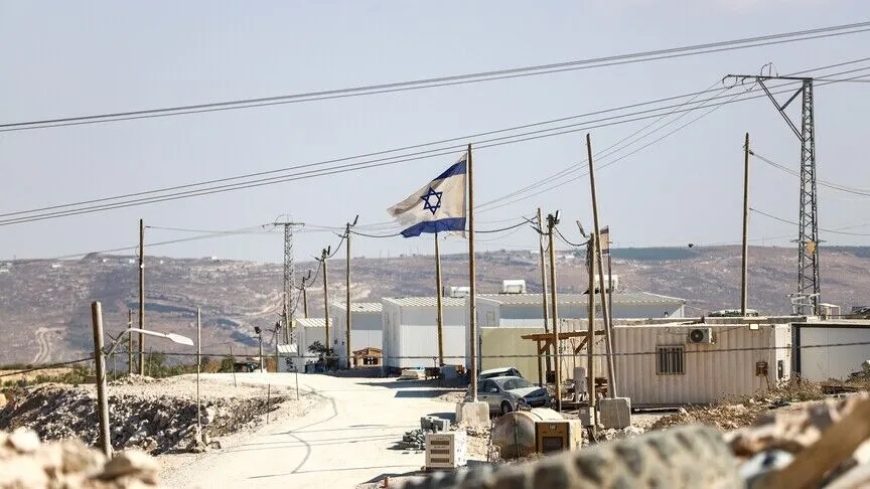
Israeli human rights group B’Tselem on Monday accused Israel of seeking to erase the Palestinian presence in the occupied West Bank through a series of interconnected policies aimed at reshaping the territory.
In a statement, the group said Israel is simultaneously employing five mechanisms that reinforce one another to dismantle the collective Palestinian presence and establish a permanent and contiguous Israeli-Jewish presence and sovereignty in the territory.
B’Tselem said Israeli policy in the occupied West Bank entered a new phase at the end of 2022, characterized by increasingly overt and accelerated policies of control, violence and dispossession.
“What Palestinians in the West Bank are experiencing is part of a single political project that permeates every aspect of life,” B’Tselem Executive Director Yuli Novak said.
She said Palestinian communities are being displaced, the economy is being pushed toward collapse, and millions of people live in constant fear of violence by the Israeli army or occupiers.
According to B’Tselem, the first mechanism is “violence and terror,” involving the use of Israeli forces and armed occupiers to intimidate Palestinians and impose violence and coercion.
The group said Israel killed 1,107 Palestinians in the occupied West Bank, including 245 children, between Oct. 7, 2023 and Aug. 31, 2026.
The second mechanism is “ethnic cleansing and takeover of space,” which the group said involves displacing Palestinians from their land while expanding the Israeli-Jewish presence.
B’Tselem said Israel has displaced 75 Palestinian communities to date, while outposts and farms established by occupiers have taken control of 1.07 million dunams (about 264,400 acres), equivalent to 18% of the occupied West Bank.
It added that around 33,000 Palestinians have been forcibly displaced from refugee camps in the northern West Bank.
The third mechanism is “economic strangulation,” with B’Tselem saying Israel uses its control over Palestinian employment opportunities, tax revenues, the financial system and infrastructure to deepen the economic crisis and Palestinian dependence on Israel.
Palestinian Finance Minister Estephan Salameh warned in July that Israel was moving toward completely withholding Palestinian clearance revenues.
Clearance revenues account for around 56% of the Palestinian Authority’s total public revenues. Also known as clearance funds, they are the tax, custom, and tariff duties collected by Israel on behalf of the Palestinian Authority. Israel began deducting portions of the funds in 2019 and stopped transferring them entirely about a year ago, with withheld revenues exceeding $6 billion, pushing the Palestinian Authority deeper into a financial crisis, leaving it unable to pay public servants’ full salaries.
B’Tselem identified “social and political destruction” as the fourth mechanism, saying Israel criminalizes attempts at political affiliation, raids and shuts down civil society organizations, suppresses protests, and arrests activists, students and journalists.
The group said Israel has detained at least 60 Palestinian journalists in the occupied West Bank since October 2023. Palestinian figures put the overall number of Palestinians detained there during the same period at more than 25,000, including journalists, students and activists.
The fifth mechanism is what B’Tselem described as the “political framework,” which it linked to Israeli Finance Minister Bezalel Smotrich’s 2017 “Decisive Plan.”
According to the group, the plan seeks to make Israeli-Jewish sovereignty irreversible through settlement expansion, land seizures and Palestinian displacement, leaving Palestinians with three options: accepting Jewish supremacy, leaving, or facing military repression.
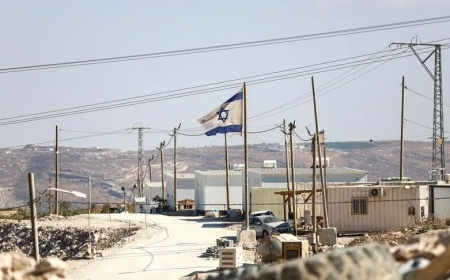
Since Prime Minister Benjamin Netanyahu’s government took office in late 2022, Israeli authorities have intensified settlement expansion in the occupied West Bank, approving 104 new settlements, according to the report.
Since the start of Israel’s war on the Gaza Strip in October 2023, Israeli forces and occupiers have also intensified attacks across the occupied West Bank and East Jerusalem, involving killings, arrests, displacement, home demolitions and settlement expansion.