





Banyamulenge Reject Fayulu’s Claims as “Historically False and Dangerous”
The Banyamulenge community has condemned Martin Fayulu’s remarks questioning their Congolese identity, warning that such rhetoric could deepen divisions and threaten national cohesion in DR Congo.

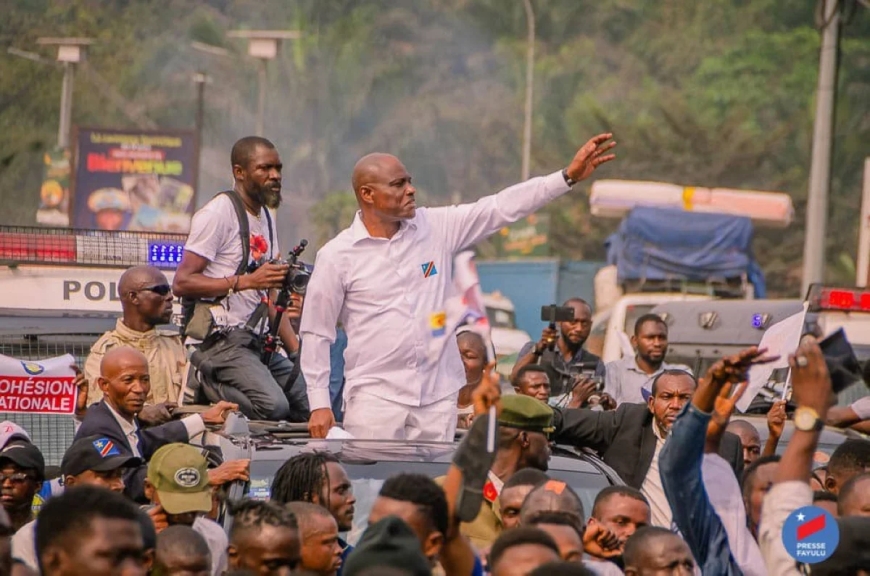
The Banyamulenge community has condemned remarks by Congolese opposition figure Martin Fayulu questioning their Congolese identity, warning that such rhetoric threatens their sense of belonging and risks deepening divisions in DR Congo.
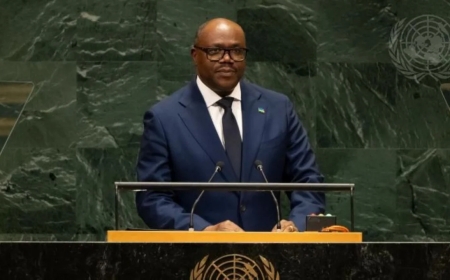
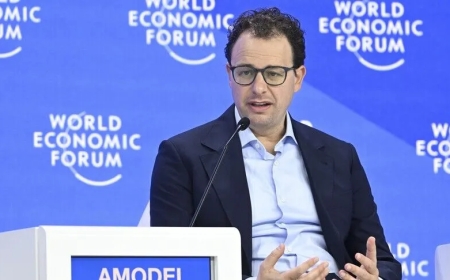
Fayulu, who ran for president in the 2018 elections, made the remarks on Wednesday, August 19, during a press conference organised by his party, Engagement pour la Citoyenneté et le Développement (ECiDé), in Brussels.
Responding to a question about the Banyamulenge, Fayulu questioned the meaning of the name and argued that ‘people of Rwandan origin’ could become Congolese through individual acquisition of nationality.
He went on to question whether the Banyamulenge constitute one of the tribes of DR Congo, arguing that Congolese tribes each have their own languages, whereas the language of the Banyamulenge is not recognised as belonging to any of them.
In a statement issued on August 21, the Banyamulenge community in the United States through Mahoro Peace Association described Fayulu’s insights as “historically false, politically irresponsible, and socially dangerous”.
Remarks threaten cohesion, association says
The association said the comments reflected a profound misunderstanding of DR Congo’s history and contributed to the “stigmatisation, exclusion, and endangerment” of a fully recognised Congolese community.
It said the remarks were also contrary to the Congolese Constitution which guarantees Congolese nationality to all its citizens, including the Banyamulenge.
The association warned that the implications go beyond the community itself.
It said the normalisation of hostility, dehumanisation and questioning of national belonging as part of political debate threatens national cohesion, citizen security and the future of the country.
“This accumulation of public statements, often relayed by certain media outlets and extremist groups, fosters a climate of suspicion and division that has already had tragic consequences in the country’s recent history,” it said.
The association said Fayulu’s remarks had reignited that climate, noting that such statements can be repeated, amplified and sometimes transformed into calls for hatred by media platforms, political actors, civil society members and extremist groups.
It said this was happening in a public sphere already weakened by decades of similar rhetoric.
Fayulu’s political role
The association said the remarks were particularly serious because of Fayulu’s position as a political leader.
Fayulu is president of ECiDé and aspires to the highest office in the Republic, it noted.
“As an opinion leader, [he] bears an increased responsibility in preserving national cohesion and respecting the diversity of the Congolese people,” the association said.
It also said the latest remarks formed part of a longer pattern.
“This is not the first time Mr. Fayulu has questioned the identity or citizenship of the Banyamulenge,” it said.
The association cited Abdoulaye Yerodia Ndombasi, Justin Bitakwira and General Sylvain Ekenge, among others, saying political figures had over the years contributed to normalising attacks targeting Tutsi communities.
It said the accumulation of such statements, particularly when amplified by media outlets and extremist groups, has helped create a climate of suspicion and division.
The association also criticised the silence from Congolese institutions in response to repeated remarks targeting the community.
It said the silence was not neutral because it encourages the recurrence of such incidents and represents a failure to uphold the State’s constitutional duty to protect all citizens without distinction.
The association further called on authorities, political actors and all other relevant forces in the country to condemn stigmatisation and exclusion.
Nangaa warns against politicising nationality
Fayulu’s remarks also drew a response from Corneille Nangaa, the political leader of the AFC/M23 movement.
In a post on X on August 19, Nangaa placed the issue within what he regards as a broader crisis of national cohesion.
“Our country is going through an accumulation of crises that demands measure, lucidity, and a sense of the State from every political leader,” Nangaa said.
He said one of the most troubling issues was the erosion of national cohesion, fuelled by inflammatory rhetoric, the stigmatisation of communities and attempts by some political actors to grant, challenge or revoke the nationality of fellow citizens according to political circumstances and interests.