

























Anthropic reveals 70 fake news sites used AI to push DR Congo political narratives
Anthropic has uncovered an AI-powered influence network that used fake news sites, social media accounts and Claude AI to promote narratives supporting Kinshasa amid tensions with Rwanda.


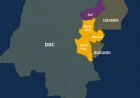
An AI-powered influence network used fabricated news outlets and social media accounts to push narratives supporting Kinshasa’s position on the conflict in eastern DR Congo, particularly on tensions with Rwanda and regional mineral deals, according to a new Anthropic report.
The network used Anthropic’s Claude AI to rewrite real news articles into politically slanted stories, add political angles to otherwise neutral reports and circulate the material as if it came from independent news organisations and ordinary social media users.
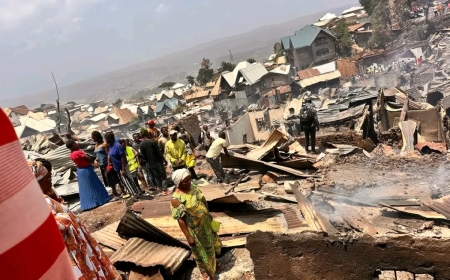
The activity was identified in an operation that became active, after tensions in eastern DR Congo intensified following the AFC/M23 capture of Goma in early 2025.
Anthropic, the US company behind Claude, released its latest threat intelligence report on September 10. It covers malicious use of its AI systems between December 2025 and August 2026.
“A close look at the network’s output revealed a heavy focus on the Democratic Republic of Congo, with 318 articles across all its fake news sites,” Anthropic found.
“These stories typically supported the DRC government’s stance, specifically focusing on regional mineral deals and ongoing tensions with Rwanda.”
Turning real news into political messaging
The operation did not rely only on inventing stories. Anthropic found that Claude was also used to take genuine reports and change how they were presented to support particular political positions.
The report said the network “repeatedly relied on three manipulation tactics”: rewriting the same source story in opposite ideological directions for different audiences, adding political angles to stories that originally had none, and moving stories across borders after stripping them of their original context.
This meant that a report that began as ordinary news could be rewritten to fit a particular political narrative and then be presented to readers in another country as locally relevant information.
Anthropic said the network used Claude to create a standardised content pipeline, with prompts requiring fixed formats, formatted HTML, exact character limits and internal links. This allowed the operators to generate and publish content at scale.
The articles were also presented under the names of journalists who did not exist.
“To make their articles look legitimate, the actors signed them using the names of fake journalists,” the report says. “Our investigation found that these writers did not actually exist.”
The fabricated bylines helped the approximately 70 websites appear to be separate local newsrooms, although Anthropic traced them back to a single operator account and shared infrastructure.
Among the representative sample of outlets identified by Anthropic were Naija Pulse, Axum Voices, Jambo Journal, Zion Pulse, Echo Berlin, The British Daily, Russian Way, Pak Sarzameen, El Pulso Popular, Fifty States, Civic Pulse and Commonwealth Post.
Each outlet was paired with a social media account on X, while more than 250 additional commenting accounts were used to amplify the content.
Coordinated DR Congo-Rwanda coverage
Anthropic found signs of coordinated activity specifically around the DR Congo-Rwanda tensions.
On September 11, 2025, several websites in the Kinshasa network published almost identical articles about the conflict within three minutes of each other.
The actors changed the tone of the articles to fit different regional audiences while coordinating distribution of the stories across numerous accounts on X.
The report said the DR Congo-focused activity also grew rapidly within the network’s own ecosystem.
“During its first few weeks, the vast majority of fake personas following their X accounts were tied to the DRC,” Anthropic said, adding that DR Congo-specific news page became “the most shared and popular account in the entire operation at that time.”
An X account presenting itself as a Congolese civilian “digital army” was also observed following several accounts belonging to the network.
Anthropic said it found no evidence that any government directed the operation.
Its investigation found signals that the activity “might reflect the interests of one or more customers with a stake in the current DRC-Rwanda conflict.”
However, the company said it was “not able to independently confirm which customers commissioned this content.”
A commercial operation spanning continents
The DR Congo activity was part of a wider commercial operation that Anthropic traced to LKM Company, a France-based digital advertising agency.
The network targeted audiences in highly contested political environments, including the United States, Brazil, France and DR Congo. It produced at least 8,913 articles in about 20 languages and operated across six continents.
Anthropic said the operation did not follow one fixed political ideology.
Instead, it “shifted political stances to support different sides of the political spectrum based on whoever was paying at the time,” behaviour that the company said was consistent with a commercial “influence-as-a-service” model.
The network was disrupted before Anthropic found evidence that it had built a significant authentic audience. Most of the content generated little observable engagement from real audiences.
Anthropic therefore assessed it as Category Two on the Brookings Institution’s Breakout Scale, meaning its content was distributed across its own websites and matching social media accounts, but there was no evidence of significant breakout into authentic communities.
AI changing influence operations
Anthropic said the DR Congo case was part of a broader pattern in which AI is making influence operations faster and easier to scale.
The report details nine influence operations originating from Russia, Iran, Turkey and across the Gulf, South Asia, Africa and Europe, targeting audiences on six continents.
The actors included governments, state-aligned propaganda institutions and state media, private firms selling influence to paying clients, domestic political operators and an opposition movement in exile.
Across the cases, AI was used to create fake social media profiles and news sites, produce political messaging, build target databases and prepare dossiers while concealing the real source of campaigns.
Anthropic said these operations showed how AI can help actors make coordinated political activity look like genuine public discussion.
“An actor might create a hundred social media accounts that appear to belong to ordinary citizens of a country,” the report says, with the accounts posting material that amplifies the same political view even though “the accounts are not real and the opinions are not genuinely held.”