












$100 Million Offer: Erik Prince Reportedly Eyes Strategic Role in Eastern DRC War
Erik Prince has reportedly travelled to Uvira amid claims of a $100 million security proposal from President Félix Tshisekedi to protect strategic mines and help counter AFC/M23 in eastern DRC.

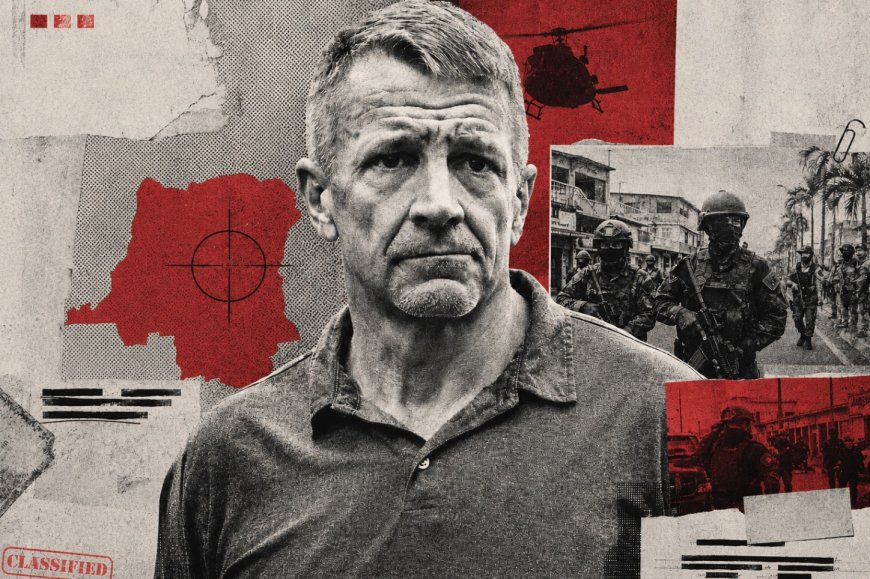
Erik Prince, the American private-security entrepreneur and founder of Blackwater which changed its name to Xe Services in 2009 and Academi in 2011 before merging into Constellis Group in 2014, has moved to eastern DRC’s battlefield as President Félix Tshisekedi’s regime seeks to reverse its military losses to AFC/M23 rebels.
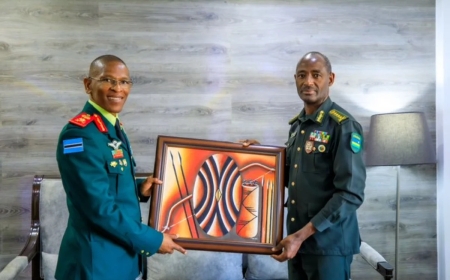
Erik arrived in Bujumbura, Burundi, from Kinshasa on August 15, accompanied by four personnel, according to concordant sources who spoke to The Great Lakes Eye. In the Burundian business capital, he met Burundi’s army chief Gen Prime Niyongabo at his office.
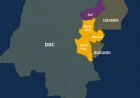
On August 16, Erik and Niyongabo crossed into eastern DRC through the Gatumba-Kavimvira border and proceeded to Uvira town in the South Kivu Province’s territory with the same name, the sources said.
The trip followed a secret security meeting in Kinshasa involving Erik, Tshisekedi, and senior Congolese and Burundian officials.
At the center of those discussions, sources say, was a USD 100 million offer from Tshisekedi to Erik to secure strategic mining sites in eastern DRC and help retake territory controlled by AFC/M23. Erik travelled to Uvira to assess the battlefield directly and determine how private military personnel could be deployed.
The Great Lakes Eye could not independently verify the precise contractual arrangements or operational scope of the deal.
Reuters reported in April 2025 that Erik had reached an agreement with Kinshasa to help secure and improve taxation of the country’s mineral wealth. Discussions had also previously considered deploying contractors around Goma before it fell under AFC/M23, which disrupted those plans.
Mines and war
Erik’s latest movements come as Kinshasa expands efforts to militarize protection of its enormous mineral wealth.
In April 2026, DRC announced a USD 100 million paramilitary mining guard, initially involving 2,500 to 3,000 recruits and eventually projected to exceed 20,000 personnel. The force is intended to protect mining sites, mineral transport routes, and foreign investments.
DRC produces roughly 70 percent of the world’s cobalt and possesses huge deposits of copper, coltan, gold, lithium, and other strategic minerals. Control and protection of those resources have increasingly become intertwined with the security crisis in the country and the personal interests of Congolese military and political figures.
Erik’s presence raises the stakes further. Protecting mines is one thing; deploying private forces to recapture AFC/M23-controlled territory would put commercial security interests directly into an active war.
The development also suggests that Tshisekedi remains determined to pursue a military solution despite years of costly battlefield failures.
The Great Lakes Eye has reported before that Niyongabo travelled to Kinshasa in August as Congolese military aircraft transported equipment through Bujumbura.
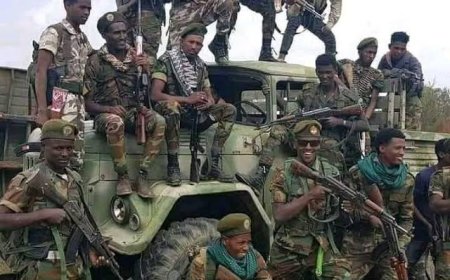
Troops, ammunition, drones, and other military supplies have also moved from Kinshasa and Burundi toward Uvira, Fizi, and other areas. On the night of August 9-10, five trucks and five Toyota pickups carrying foreign mercenaries, logistical supplies, and kamikaze drones crossed the Gatumba-Kavimvira frontier toward Baraka, according to sources.
Erik has now travelled through the same corridor.
The pattern echoes Kinshasa’s previous strategy: assembling FARDC troops, regional allies, armed groups, foreign contractors, and heavy weaponry in an attempt to overwhelm AFC/M23.
That strategy ended disastrously in Goma in January 2025, when the coalition was heavily defeated and fled in disarray.
Before the fall of Goma, the capital of North Kivu Province, Kinshasa had assembled FARDC soldiers, Wazalendo militias, FDLR genocidal militiamen, Burundian troops, SADC forces, and foreign military contractors against AFC/M23.
It was not enough. AFC/M23 took control of Goma as coalition forces collapsed, with retreating forces abandoning significant quantities of military equipment.
Among the most striking scenes from the defeat were hundreds of Romanian private military contractors hired to support Congolese forces surrendering and leaving the battlefield. They were subsequently handed over and evacuated through Rwanda, where they underwent security processing before being flown home.
The episode exposed the limits of Kinshasa’s reliance on expensive foreign military expertise. Yet private contractors are again moving toward the center of its strategy.
A dangerous new gamble
Erik is no ordinary contractor. A former US Navy SEAL, he founded Blackwater, the private military company that became synonymous with controversial US security operations in Iraq and Afghanistan. His later business interests have stretched across security, logistics, and natural resources.
His deeper involvement in DRC complicates a conflict already crowded with state armies, militias, regional forces, and foreign contractors.
It also carries an unmistakable financial dimension. DRC’s cobalt, copper, gold, coltan, and lithium deposits are worth enormous sums, making security around mines and mineral corridors potentially lucrative business.
For Tshisekedi, Erik represents another attempt to acquire the military capacity needed to protect strategic resources and push back AFC/M23.
But Goma provides a stark warning. Kinshasa previously deployed soldiers, regional allies, militias, heavy weapons, and mercenaries—and still suffered a crushing defeat.
Bringing more private military actors into the conflict is unlikely to address the political and security failures behind eastern DRC’s decades-long crisis. Tying lucrative mineral interests more closely to an escalating war deepens an already catastrophic situation.
As Erik surveys Uvira and Kinshasa again, building military capacity in South Kivu, Tshisekedi appears prepared to gamble once more on force, where force has repeatedly failed.
For private security interests, eastern DRC’s mineral war may offer lucrative opportunities. For a region already devastated by conflict, another mercenary-driven military adventure could carry a far greater price.